
The promise of “steady energy the whole morning” is a compelling one for anyone facing a busy day. Belvita Breakfast Biscuits, available in crunchy, soft-baked, and sandwich styles, market themselves as the convenient solution to breakfast-skipping. But does this popular snack live up to its healthy billing?
As a nutrition professional, I examine foods through a lens of both science and practicality. Below is a complete breakdown of Belvita’s nutrition, ingredients, and role in a balanced diet.
So, are Belvita Breakfast Biscuits a smart choice? This review provides the facts you need to decide.
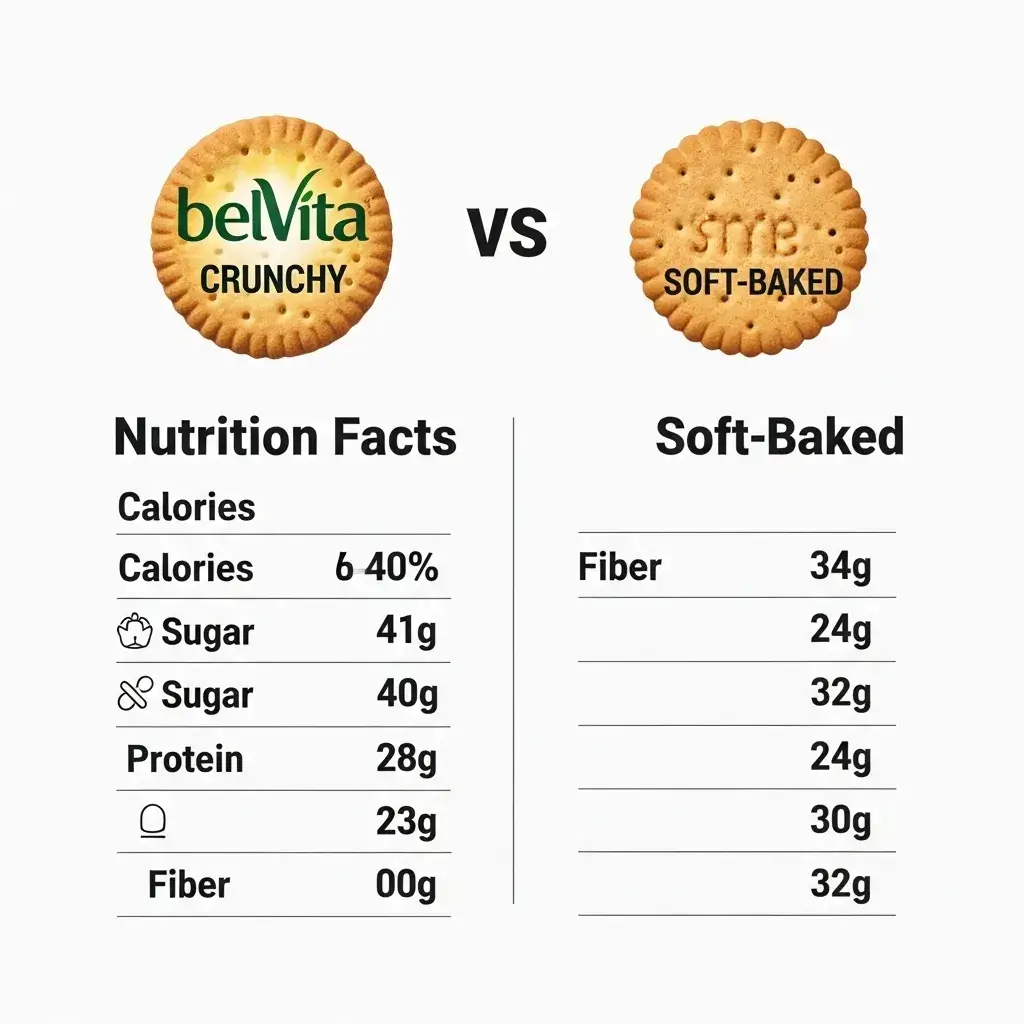
NUTRITION FACTS: CRUNCHY VS. SOFT-BAKED
A side-by-side comparison reveals important differences between the two main types. All values are for one standard serving package.
Nutritional Comparison Table
| NutrientBelvita Crunchy Biscuits (Cinnamon Brown Sugar) 50g serving (4 biscuits)Belvita Soft-Baked Biscuits (Banana Bread) 50g serving (1 bar) | ||
|---|---|---|
| Calories | 230 | 200 |
| Total Fat | 8g | 8g |
| Carbohydrates | 36g | 32g |
| Dietary Fiber | 2g (7% DV) | 4g (14% DV) |
| Total Sugars | 10g | 9g |
| Added Sugars | 10g (20% DV) | 7g (14% DV) |
| Protein | 3g | 3g |
Macronutrient Summary
Both varieties are primarily a source of carbohydrates and fat, providing minimal protein. The Soft-Baked option offers more fiber and less added sugar, making it a marginally better choice from a nutritional standpoint.
INGREDIENT ANALYSIS: WHAT’S INSIDE?
Understanding the ingredient list is key to evaluating any packaged food.
The Core Components
- Whole Grains (Wheat, Oats, Rye): The primary ingredient. These provide complex carbohydrates and some fiber, which are responsible for the product’s “slow-release” energy claim.
- Enriched Wheat Flour: Refined flour that has been fortified with B vitamins and iron. It improves texture but lacks the full nutrient profile of whole grains.
- Canola Oil: A common source of unsaturated fat used for texture and mouthfeel. It is generally considered a heart-healthier fat.
- Added Sweeteners (Sugar, Malt Syrup, Fruit Purees): These all contribute to the “Added Sugars” count on the label. Natural-sounding syrups and purees are still forms of added sugar.
- Emulsifiers & Leavening (e.g., DATEM): Additives used to create a consistent texture and rise. They are recognized as safe by major food safety agencies.
- Fortified Vitamins & Minerals (Iron, B Vitamins): Nutrients added during processing. This fortification boosts the nutritional profile, similar to many breakfast cereals.

POTENTIAL HEALTH BENEFITS
When viewed as a component of a meal, Belvita offers a few advantages.
Provides Whole Grains
Each serving contains a meaningful amount of whole grains. Regular consumption of whole grains is associated with a lower risk of heart disease and improved digestive health.
Fortified Nutrients
They are a convenient source of Iron and B Vitamins like Thiamin, Niacin, and Folic Acid, which are essential for converting food into energy.
Convenience and Portion Control
For individuals who would otherwise skip breakfast entirely, the pre-portioned package offers a shelf-stable, grab-and-go option that can help regulate appetite.
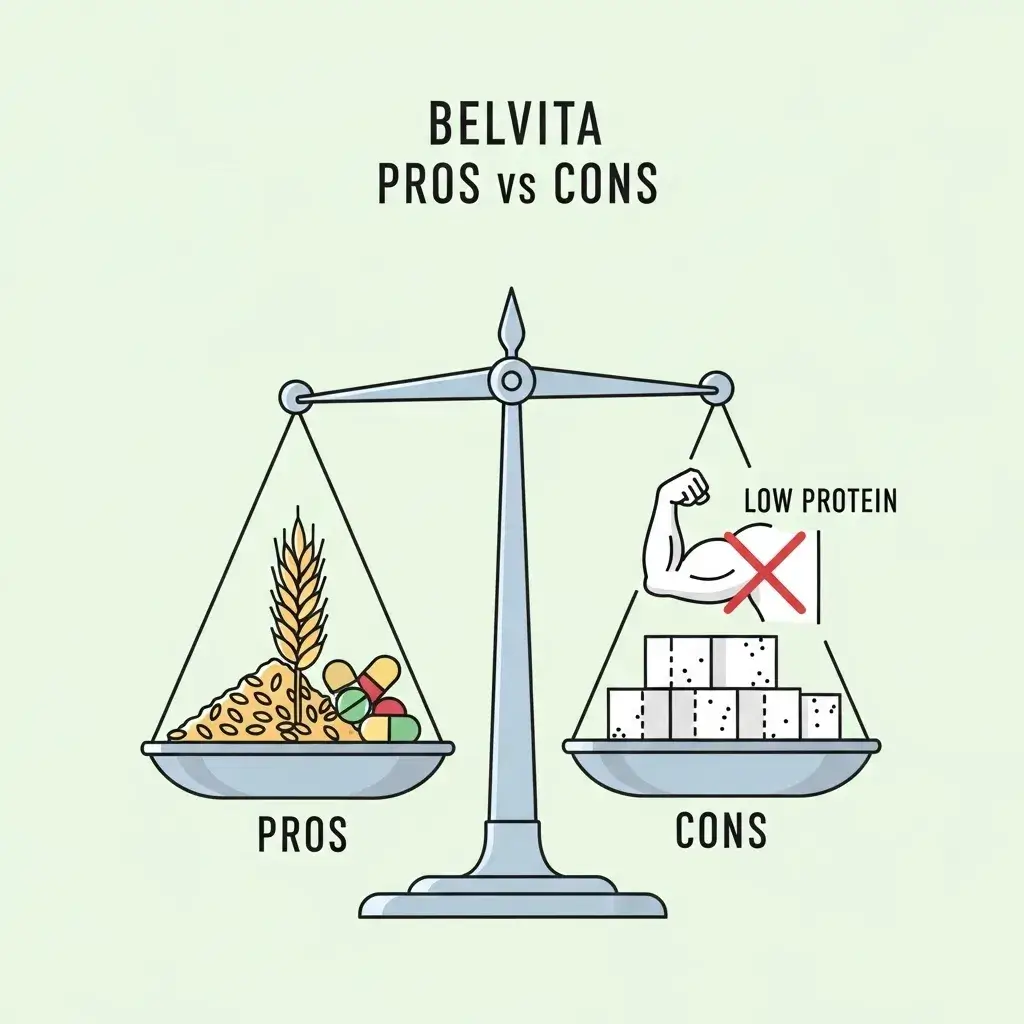
KEY DRAWBACKS TO CONSIDER
The following limitations are significant and determine how this product should be used.
High in Added Sugars
A single serving provides 7-10 grams of added sugar, which is 14-20% of the recommended daily limit. Regular high intake of added sugars is linked to adverse health outcomes.
Low in Protein and Fiber (Crunchy Version)
With only 3 grams of protein, these biscuits are not satiating on their own. The crunchy version’s 2 grams of fiber is also low, failing to provide the fullness and digestive benefits of a high-fiber meal.
Processed Food Classification
Belvita is an ultra-processed food containing multiple additives and refined ingredients. A diet centered on whole, minimally processed foods is superior for long-term health.
Misleading “Complete Breakfast” Perception
Marketing can create the impression that this is a balanced meal. In reality, it is a carbohydrate-heavy snack that lacks the protein and healthy fats necessary for a truly sustaining breakfast.
THE BOTTOM LINE: FINAL VERDICT
Belvita Breakfast Biscuits are not a health food, but they can serve as an occasional convenience item when used correctly.
Final Recommendations:
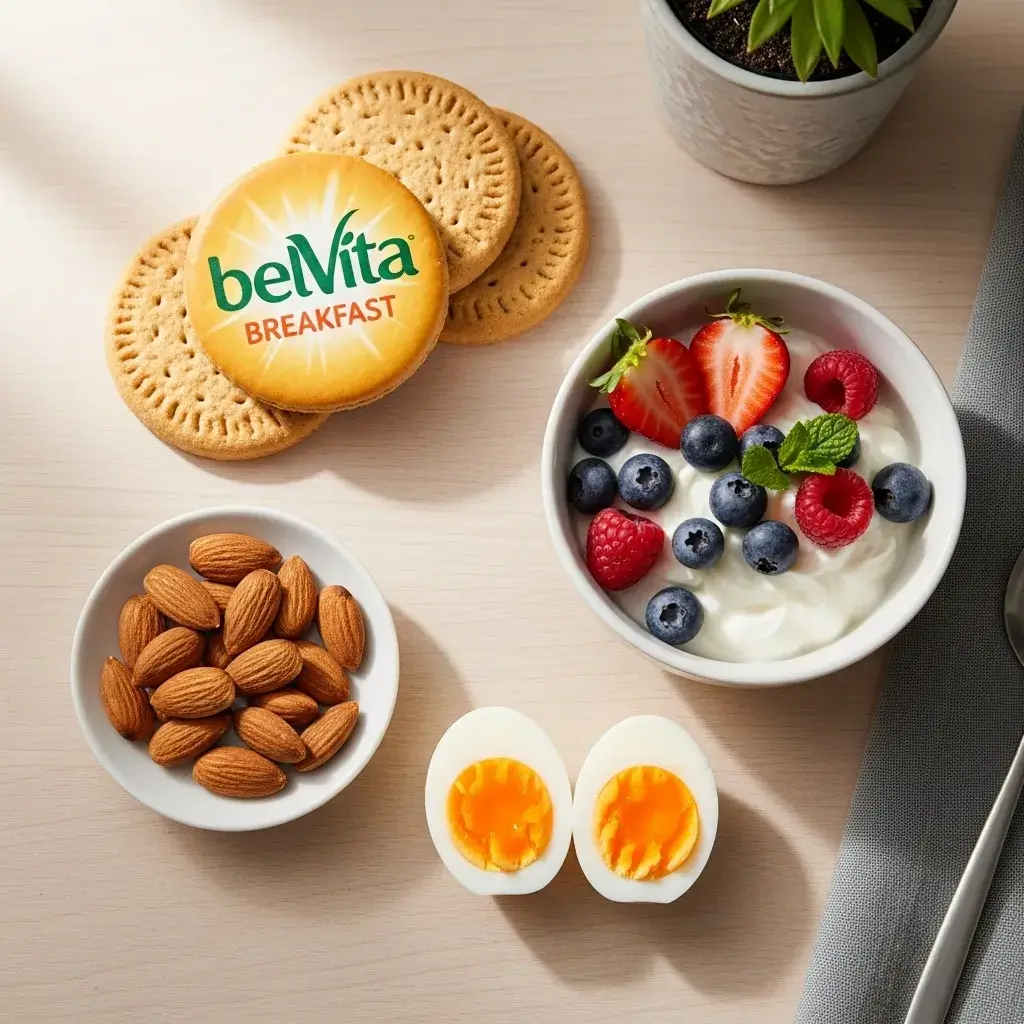
- NEVER Eat Them Alone. Always pair a biscuit with a source of protein and healthy fat. Examples: Greek yogurt, a handful of almonds, a hard-boiled egg, or cheese.
- Choose the Soft-Baked Variety. Opt for the soft-baked bars when possible, as they generally contain more fiber and less added sugar than the crunchy biscuits.
- View as a “Bridge” or Component. They are best used as a carbohydrate component of a larger meal or as a “better-than-nothing” option on exceptionally rushed mornings.
- Prioritize Whole Foods. For daily breakfast, prioritize whole-food options like oatmeal, eggs, or yogurt with fruit and nuts, which provide superior nutrition, protein, and fiber without the added sugars and processing.
In summary, while Belvita has some fortified nutrients and whole grains, its high added sugar and low protein content make it an incomplete breakfast. Strategic pairing is essential if you choose to include it in your diet.