
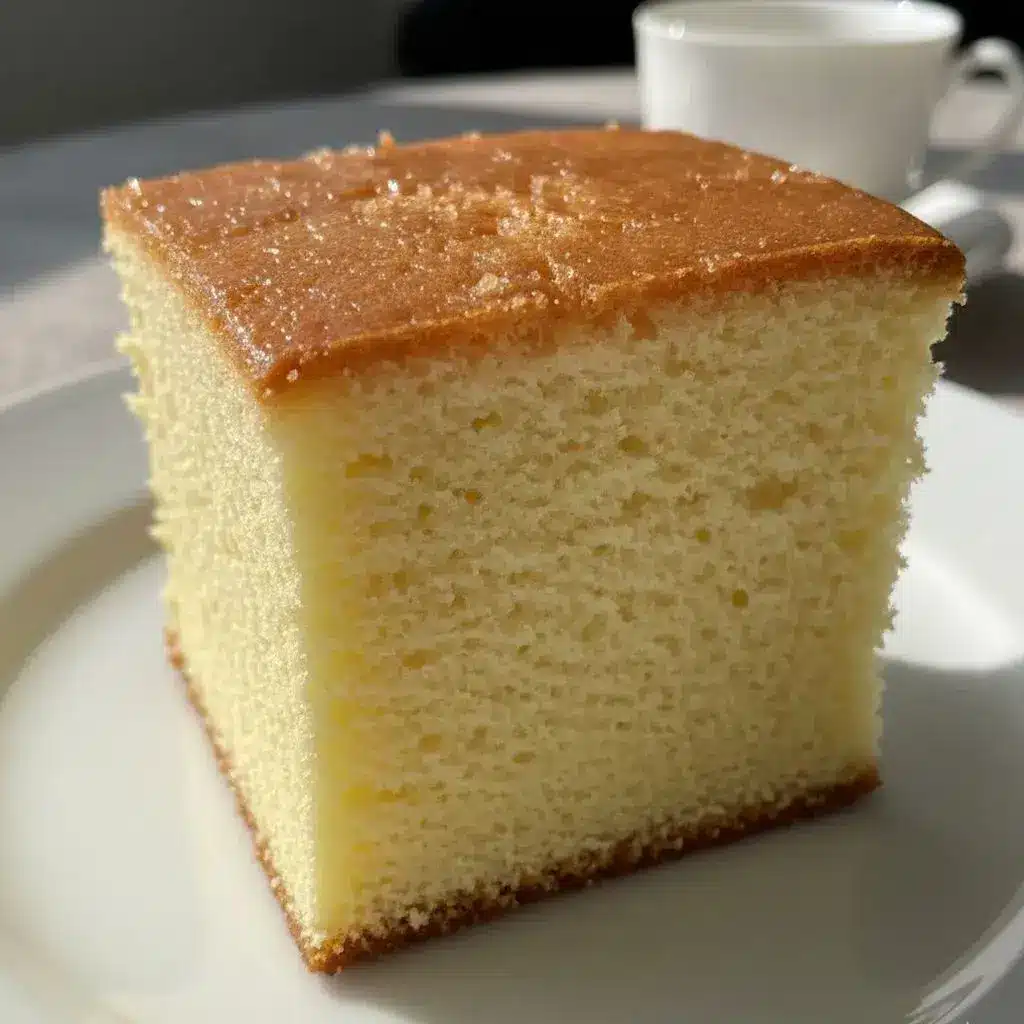
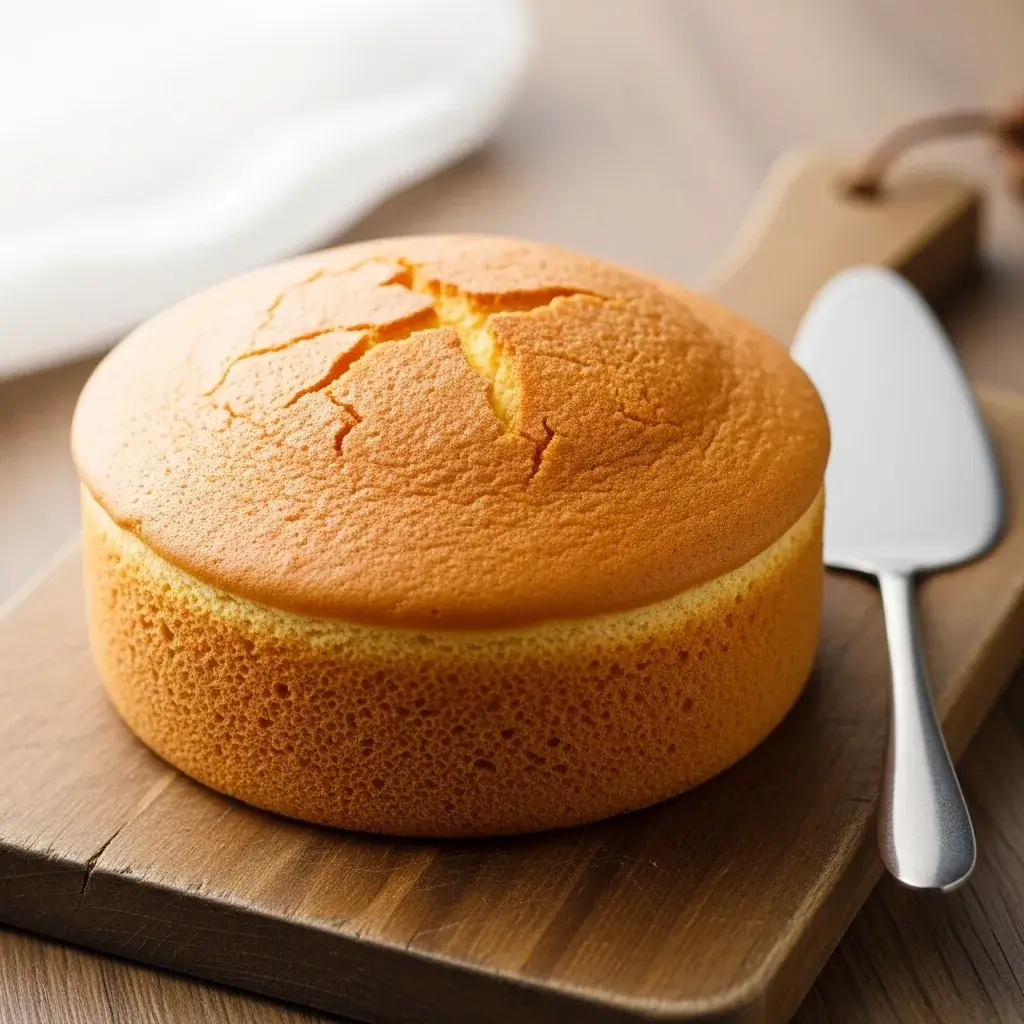
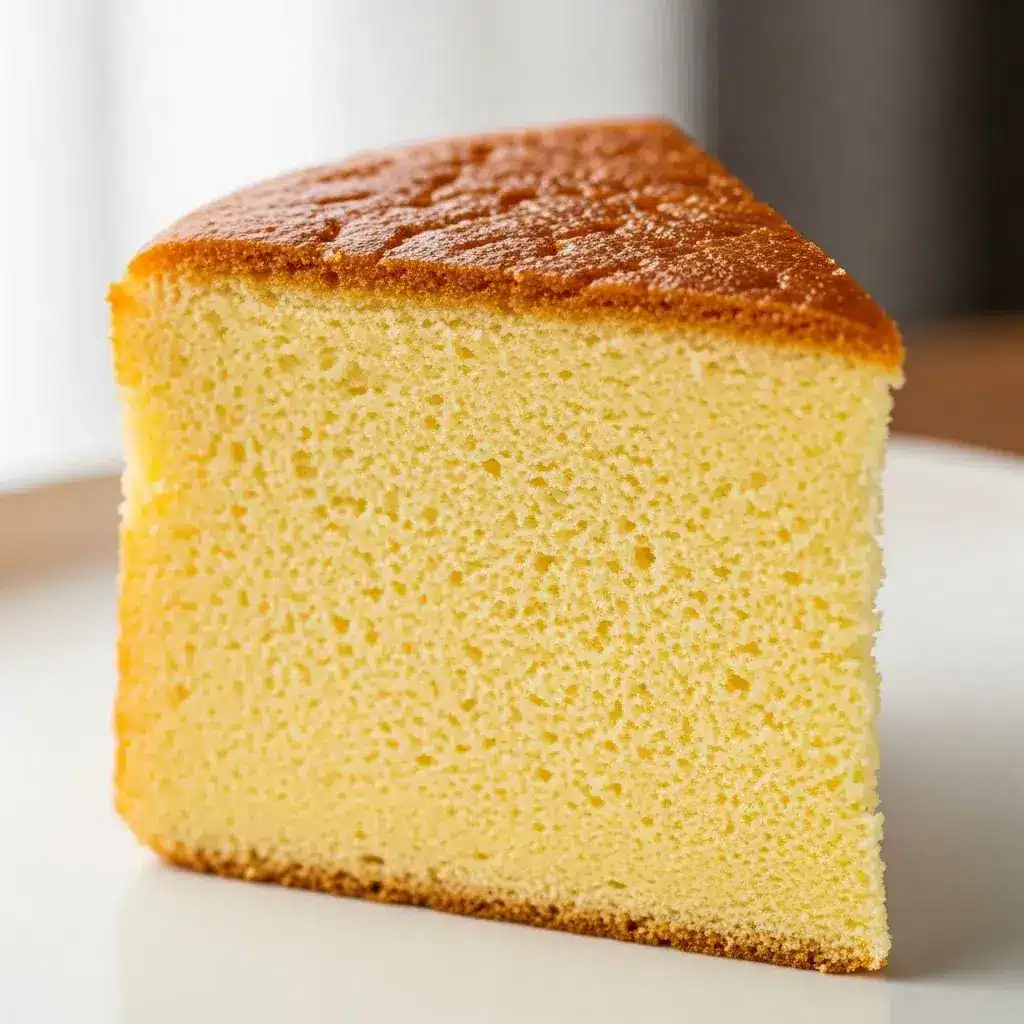
This Chinese Sponge Cake recipe is your gateway to a world of delicate, airy sweetness. Known as Ji Dan Gao (鸡蛋糕), this cake is a beloved cornerstone of Chinese bakeries and home kitchens alike. Imagine a cake with a golden-brown, slightly sticky top and an interior that’s impossibly light, fluffy, and moist, with a gentle sweetness that melts on your tongue.
Unlike Western butter cakes, its magic comes from whipped eggs and steam, resulting in a uniquely tender, springy texture. It’s a humble, comforting cake that requires no frosting, letting its pure, elegant flavor shine through.
WHY YOU WILL LOVE THIS CHINESE SPONGE CAKE
You will be amazed at how simple ingredients create such a special dessert.
- Firstly, this Chinese Sponge Cake is incredibly light and not overly sweet, making it the perfect treat for any time of day breakfast, snack, or dessert.
- Secondly, its texture is a marvel: springy, soft, and moist without being dense or heavy.
- Furthermore, it’s naturally dairy-free and can easily be made gluten-free, making it a wonderfully inclusive option.
- Finally, mastering this Chinese Sponge Cake recipe feels like a rite of passage, connecting you to generations of bakers who have cherished this simple, perfect cake.
Chinese Sponge Cake: The Light, Fluffy, and Timeless Treat
- Total Time: 1 hour 5 minutes
- Yield: 8 servings 1x
- Diet: Vegetarian
Description
A light, airy, and delicately sweet Chinese sponge cake made with whipped eggs for its signature fluffy texture.
Ingredients
- 6 large eggs, separated
- 3/4 cup granulated sugar, divided
- 1 cup cake flour
- 1/4 cup whole milk
- 3 tbsp melted butter or neutral oil
- 1 tsp vanilla extract
- 1/4 tsp salt
- 1/4 tsp cream of tartar
Instructions
- 1. Preheat oven to 325°F (163°C). Line the bottom of an 8-inch round cake pan with parchment paper do not grease the sides.
- 2. Whisk egg yolks with half of the sugar until pale and thick.
- 3. Add milk, melted butter, and vanilla; whisk to combine.
- 4. Sift in cake flour and salt, mixing gently until smooth.
- 5. In a separate bowl, beat egg whites with cream of tartar until foamy.
- 6. Gradually add remaining sugar and whip to stiff, glossy peaks.
- 7. Fold one-third of the egg whites into the yolk batter to lighten it, then gently fold in the remaining whites.
- 8. Pour batter into the prepared pan and tap lightly to remove air bubbles.
- 9. Bake for 40–45 minutes or until the top is lightly golden and springs back to the touch.
- 10. Invert the cake pan onto a cooling rack and let cool completely upside down.
- 11. Run a knife around the edges and remove the cake from the pan before slicing.
Notes
- Use room temperature eggs for the best volume.
- Avoid overmixing the batter after adding the whipped egg whites to keep the cake fluffy.
- Serve plain, dusted with powdered sugar, or with fresh fruit.
- Prep Time: 20 minutes
- Cook Time: 45 minutes
- Category: Dessert
- Method: Baking
- Cuisine: Chinese
Nutrition
- Serving Size: 1 slice
- Calories: 150
- Sugar: 16g
- Sodium: 95mg
- Fat: 4g
- Saturated Fat: 2g
- Unsaturated Fat: 2g
- Trans Fat: 0g
- Carbohydrates: 23g
- Fiber: 0g
- Protein: 4g
- Cholesterol: 115mg
Keywords: Chinese sponge cake, fluffy cake, Asian bakery cake
WHAT YOU WILL NEED
The ingredient list is beautifully minimal. Precision and technique are your key tools here.
The Essential Four:
- Eggs: 4 large eggs, at room temperature. This is non-negotiable for maximum volume.
- Granulated Sugar: For sweetness and stability. We’ll use about 3/4 cup.
- Cake Flour: This low-protein flour is essential for the tender, fine crumb. If you don’t have it, see the tip below.
- Neutral Oil: A few tablespoons of vegetable or canola oil for moisture.
- Vanilla Extract (Optional): A teaspoon for a warm, familiar flavor. Traditional versions may use a drop of almond extract or none at all.
The Secret for Success:
- Cream of Tartar or Lemon Juice: Just a pinch or a few drops to stabilize the egg whites. This helps create a strong, voluminous foam.
TOOLS YOU WILL WANT
You will need an 8-inch round cake pan (preferably with a removable bottom), a stand mixer or electric hand mixer, a large mixing bowl, a sifter, a spatula, and a large pot or steamer with a lid. Parchment paper is also crucial.
HOW TO MAKE THIS CHINESE SPONGE CAKE
Follow these steps with care; the technique is everything for this Chinese Sponge Cake.
Prepare the Pan and Steamer
- First, line the bottom of your cake pan with parchment paper. Do not grease the sides. The batter needs to cling to the sides to rise properly.
- Fill your steamer or a large pot with a few inches of water and bring it to a rolling boil. The steamer basket should be above the water, not touching it.
Whip the Eggs and Sugar
- In the spotlessly clean bowl of your stand mixer, combine the room-temperature eggs and all of the sugar.
- Place the bowl over a pot of simmering water (double boiler), making sure the bottom doesn’t touch the water. Whisk constantly by hand for 2-3 minutes until the sugar is completely dissolved and the mixture is warm to the touch (about 110°F/43°C).
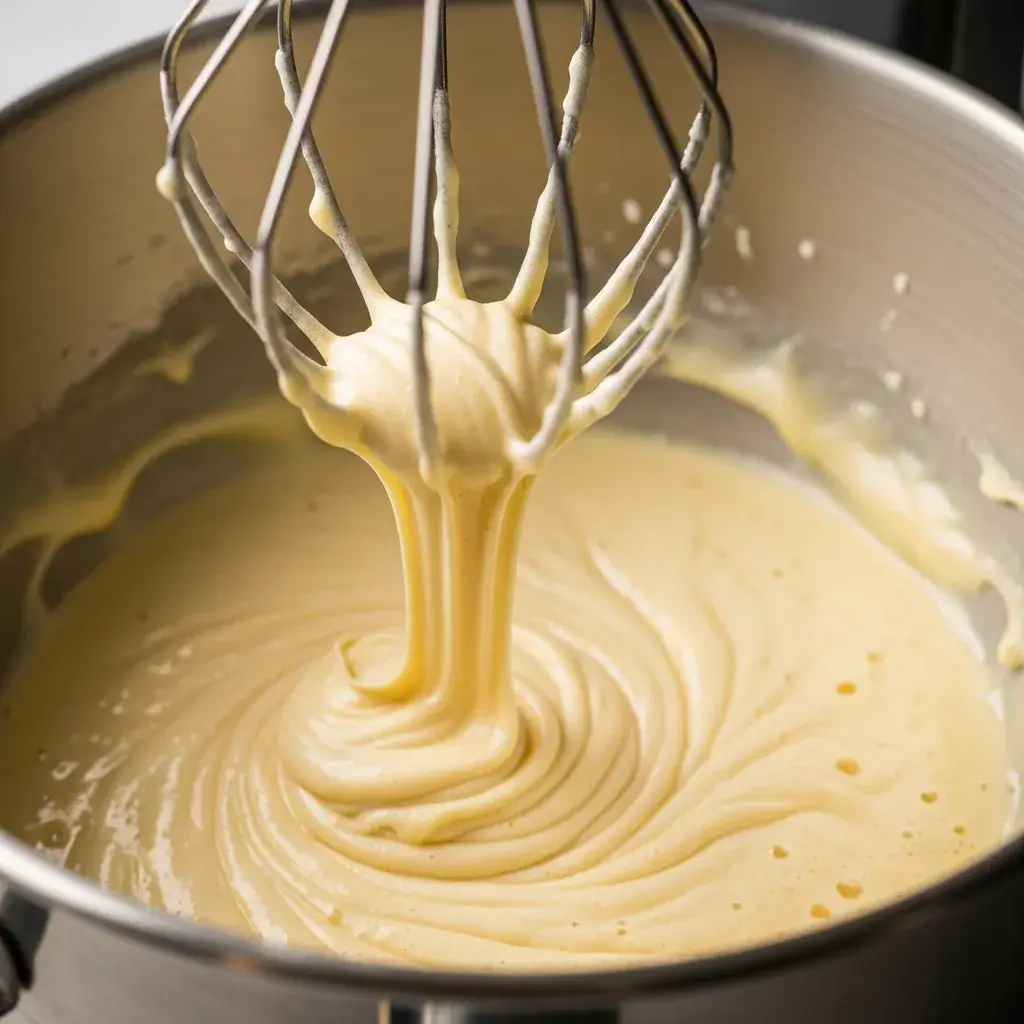
- Transfer the bowl to the stand mixer fitted with the whisk attachment. Whip on high speed for 5-8 minutes until the mixture is very pale, thick, and tripled in volume. When you lift the whisk, the ribbon that falls should hold its shape on the surface for a few seconds. This is called the “ribbon stage.”
Fold in the Flour and Oil
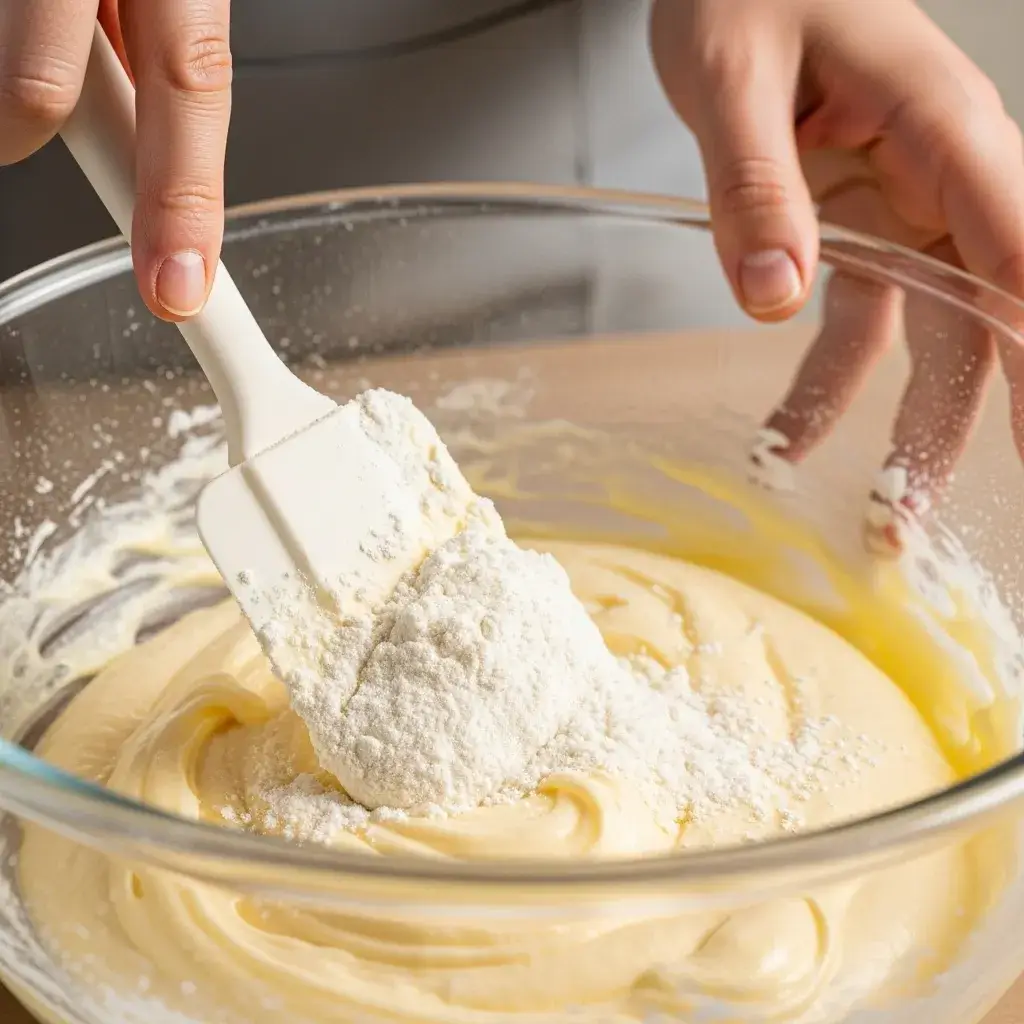
- Sift the cake flour over the whipped eggs in three batches. Using a spatula, gently fold the flour in after each addition until just combined. Use a light hand to avoid deflating the precious air bubbles.
- In a small bowl, mix the neutral oil (and vanilla, if using) with a spoonful of the batter to lighten it. Then, gently fold this mixture back into the main batter until just incorporated.
Steam, Don’t Bake
- Pour the batter into your prepared pan. Tap it lightly on the counter to release any large air bubbles.
- Carefully place the pan into the preheated steamer. Cover the steamer lid with a kitchen towel to prevent condensation from dripping onto the cake.
- Steam over medium-high heat for 25-30 minutes. Do not open the lid during this time! The cake is done when it springs back when lightly touched, and a skewer inserted comes out clean.
The Crucial Cooling Step
- Immediately remove the cake from the steamer. Drop the pan from a height of about 6 inches onto the counter. This shock helps prevent collapse.
- Run a thin, sharp knife around the edge of the pan to loosen the cake.
- Invert the cake onto a wire rack, peel off the parchment paper, and then flip it right-side-up to cool completely. This prevents the top from getting sticky.
TIPS AND TRICKS FOR PERFECT CHINESE SPONGE CAKE
I want to share the traditional secrets for a flawless Chinese Sponge Cake. Room temperature eggs are non-negotiable; they whip to a much greater volume. Furthermore, dissolving the sugar over heat ensures a stable foam and a finer texture. When folding, use a “J” motion with your spatula, cutting through the center and scooping up from the bottom.
Be gentle and patient. To prevent a “beanie” top (a dome with a dense strip underneath), ensure your steamer’s heat is consistent, and you don’t open the lid prematurely.
VARIATIONS YOU WILL ACTUALLY TRY
This basic Chinese Sponge Cake recipe is a wonderful canvas. For a Green Tea (Matcha) Sponge Cake, sift 1-2 tablespoons of high-quality matcha powder with the cake flour. For a Black Sesame Cake, grind 3 tablespoons of black sesame seeds into a powder and fold them in with the flour. You can also create a Marbled Cake by dividing the batter and mixing cocoa powder into one portion, then layering or swirling them before steaming.
MAKE-AHEAD, STORAGE & FREEZING
This Chinese Sponge Cake is wonderfully versatile for planning. You can store the fully cooled cake, wrapped tightly in plastic wrap, at room temperature for 1 day or in the refrigerator for up to 5 days. It freezes perfectly for up to 2 months.
Wrap individual slices or the whole cake in plastic wrap and then in foil. Thaw in the refrigerator or at room temperature.
TROUBLESHOOTING: COMMON QUESTIONS
Let’s solve common issues.
- If my cake collapsed, the egg foam was likely under-whipped, the sugar wasn’t fully dissolved, or the steamer lid was opened too early.
- If the cake is dense, the flour was over-mixed and deflated the batter, or the eggs were not at room temperature. If the bottom is wet, there was too much water in the steamer or it was boiling too vigorously, causing water to splash up.
- If I don’t have cake flour, you can make a substitute: for every 1 cup of all-purpose flour, remove 2 tablespoons and replace with 2 tablespoons of cornstarch. Sift together 5 times.
SERVING SUGGESTIONS
This Chinese Sponge Cake is exquisite all on its own, slightly warm or at room temperature. For a traditional Hong Kong-style treat, serve it with a generous layer of peanut butter or kaya (coconut jam) sandwiched between two slices. It’s also fantastic, lightly toasted and served with fresh fruit and a dollop of whipped cream.
NUTRITION NOTES
This Chinese Sponge Cake is naturally dairy-free. Using cake flour makes it lighter, and the sugar content can be slightly reduced by 1-2 tablespoons if desired, though it may affect texture. For a gluten-free version, use a certified gluten-free cake flour blend.
MY STORY: WHY I ADORE THIS CHINESE SPONGE CAKE
This Chinese Sponge Cake is the taste of my childhood visits to my grandmother’s apartment. She didn’t have an oven, but her kitchen was a wizard’s den of steam and smoke. She would whip the eggs by hand in a large copper bowl, her movements swift and sure.
The waiting as it steamed felt like an eternity, but the reward, a cloud-like, fragrant cake, was pure magic. Now, when I make it in my own kitchen with my stand mixer, the scent of sweet steam transports me back to her side. It’s a recipe that connects me to her, to resilience, and to the profound love expressed in the simplest of foods.
FINAL CHECKLIST BEFORE YOU STEAM
Before you start, do a quick scan:
- Eggs are at room temperature.
- Steamer water is at a rolling boil.
- Cake pan is lined with parchment (ungreased sides).
- Stand mixer bowl and whisk are impeccably clean and grease-free.
- You have a kitchen towel ready for the steamer lid.
CHINESE SPONGE CAKE FAQS
Why is my Chinese sponge cake sticky on top?
A slightly sticky top is traditional and desired! It comes from the steam condensation. If it’s overly wet, your steamer lid wasn’t wrapped with a towel, or the cake was not cooled upside down.
Can I bake this cake instead of steaming it?
Yes, though the texture will be slightly drier and more like a Western sponge cake. Bake in a preheated 325°F (160°C) oven for 25-30 minutes. The signature moist, springy texture truly comes from steaming.
What’s the difference between this and a chiffon cake?
Chiffon cake uses vegetable oil and contains baking powder, yielding a richer, moister crumb. This Chinese Sponge Cake (Ji Dan Gao) uses only eggs, sugar, and flour, steamed for a uniquely light, springy, and slightly sticky texture.
Why did you drop the cake after steaming?
The sharp drop shocks the cake, causing it to contract slightly from the pan walls and helping to prevent a sudden collapse from temperature change. It’s a classic technique for tall, light cakes.