
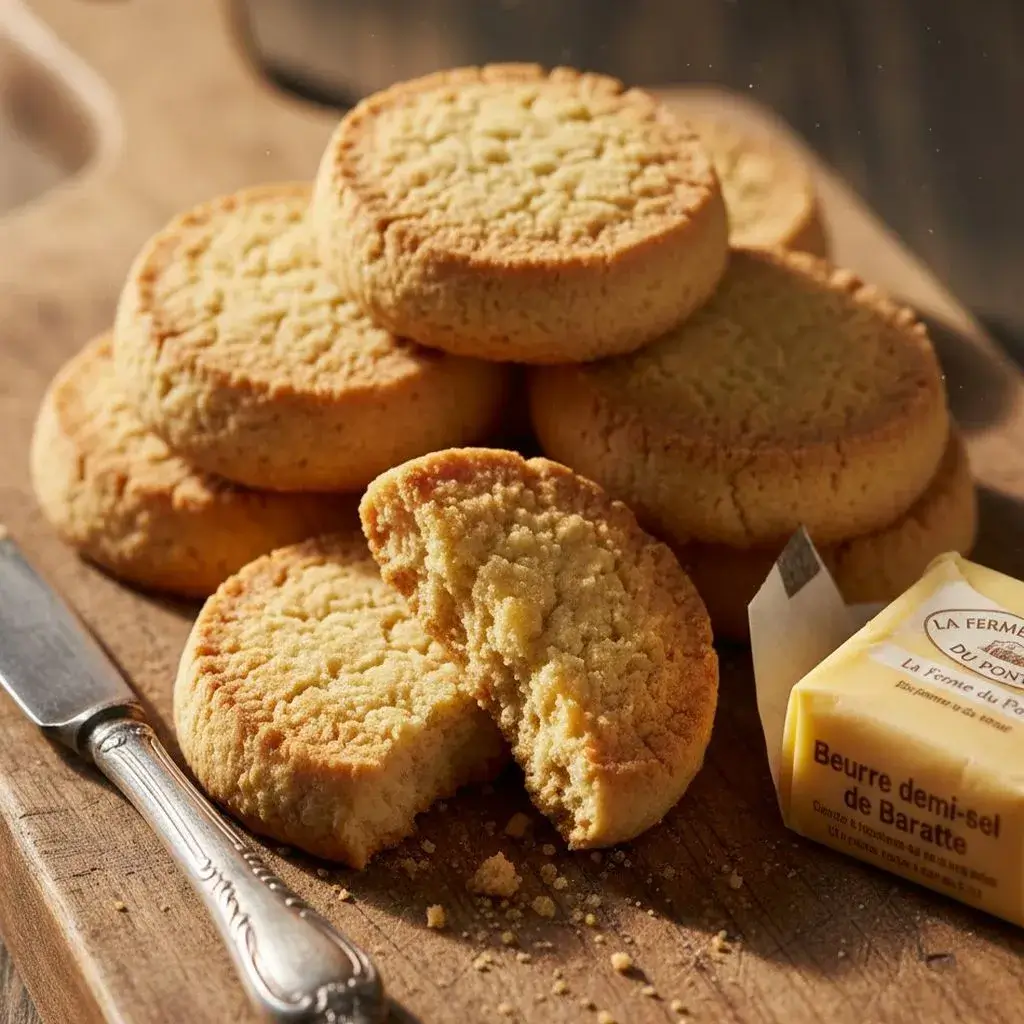
Close your eyes and imagine the most buttery, crumbly cookie you’ve ever tasted. Now, amplify that richness with a delicate, savory whisper of salt that makes each bite utterly irresistible. This is not just any cookie; this is the Sablés Bretons, a Classic French Salted Butter Cookie from the coast of Brittany that is the very definition of simple elegance.
With a texture that’s both tender and sandy (sablé means “sandy” in French) and a flavor profile that is profoundly rich yet perfectly balanced, this recipe is a masterclass in how a few exquisite ingredients can create pure magic. I promise you, once you taste a homemade Sablés Bretons, store-bought shortbread will never compare.
WHY THIS SABLÉS BRETONS RECIPE IS AUTHENTIC AND FOOLPROOF
This French Salted Butter Cookies recipe works because it honors the traditional French technique while offering clear guidance for home bakers.
- First, we use a high-quality, salted butter with visible salt crystals, which is non-negotiable for authentic flavor.
- Second, the unique method of using an egg yolk and no other liquid creates that signature dense, melt-in-your-mouth crumb.
- Third, the dough is remarkably easy to handle, thanks to a brief chill that firms it up without making it hard.
- Finally, the classic crosshatch scoring and golden egg wash finish give these Classic French Salted Butter Cookies their iconic, beautiful appearance that is as impressive as their taste.
Classic French Salted Butter Cookies (Sablés Bretons)
- Total Time: 1 hour 30 minutes
- Yield: 24 cookies 1x
- Diet: Vegetarian
Description
Rich, buttery classic French sablés made with only five simple ingredients and known for their tender crumb and signature salty-sweet flavor.
Ingredients
- 1 cup salted European-style butter, softened
- 2/3 cup granulated sugar
- 2 large egg yolks
- 2 cups all-purpose flour
- 1/2 teaspoon flaky sea salt (for topping)
Instructions
- 1. Beat the softened salted butter and sugar together until creamy.
- 2. Mix in the egg yolks until fully incorporated and smooth.
- 3. Add the flour and mix just until a soft dough forms do not overmix.
- 4. Shape dough into a log, wrap in plastic, and chill for at least 1 hour.
- 5. Preheat oven to 350°F (175°C). Line baking sheets with parchment paper.
- 6. Slice chilled dough into 1/4-inch rounds and place on prepared sheets.
- 7. Sprinkle lightly with flaky sea salt.
- 8. Bake for 12–15 minutes or until edges turn pale golden.
- 9. Cool completely on the baking sheet before serving.
Notes
- For the best flavor, use high-fat European-style butter.
- Dough can be frozen for up to 2 months slice and bake directly from frozen.
- Add lemon zest or vanilla for a subtle twist without losing the classic taste.
- Prep Time: 10 minutes
- Cook Time: 15 minutes
- Category: Dessert
- Method: Baked
- Cuisine: French
Nutrition
- Serving Size: 1 cookie
- Calories: 120
- Sugar: 7g
- Sodium: 95mg
- Fat: 7g
- Saturated Fat: 5g
- Unsaturated Fat: 2g
- Trans Fat: 0g
- Carbohydrates: 12g
- Fiber: 0g
- Protein: 1g
- Cholesterol: 30mg
Keywords: sables bretons, French butter cookies, salted butter cookies
THE INGREDIENTS FOR AUTHENTIC SABLÉS BRETONS
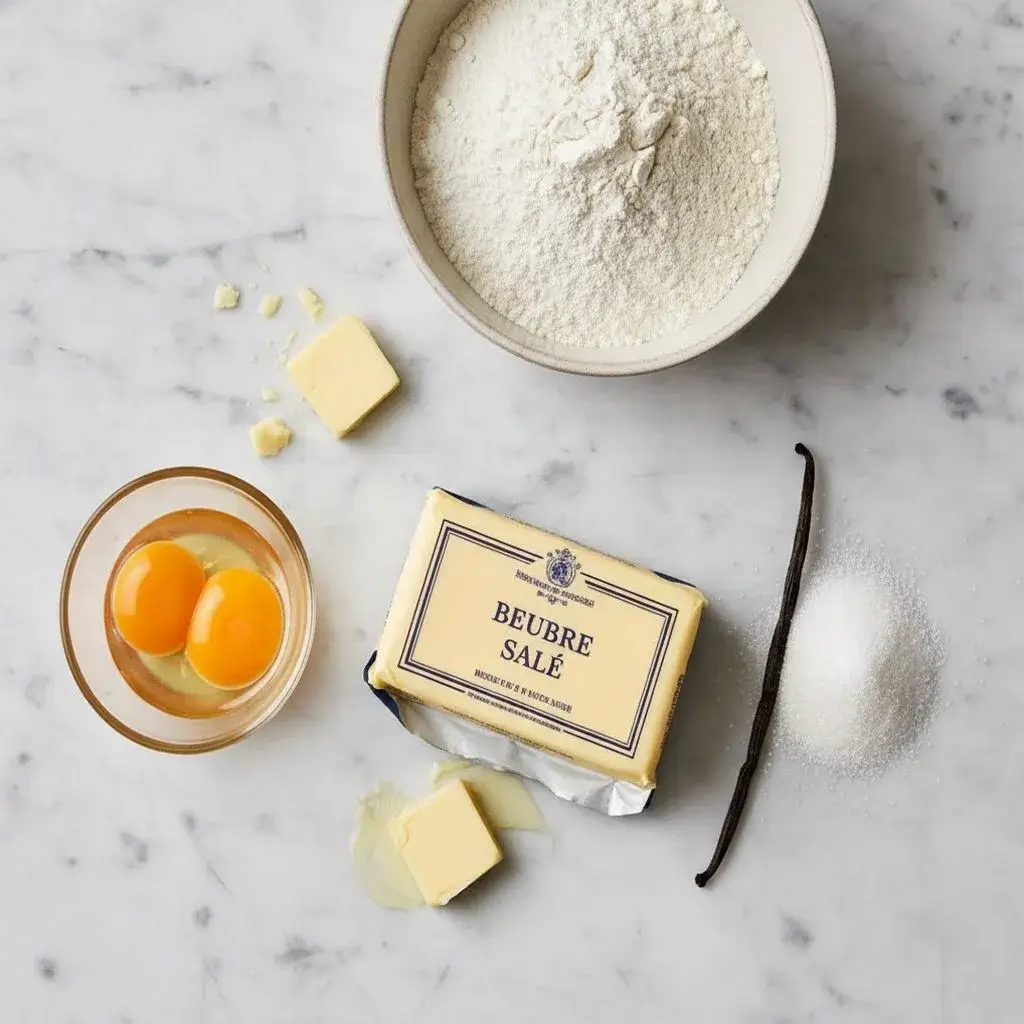
The magic of the Sablés Bretons lies in its simplicity. Each ingredient plays a starring role, so quality is paramount.
- High-Fat Salted Butter (1 cup / 225g), cold and cubed: You must use a European-style salted butter with a fat content of 82% or higher, like Beurre de Baratte or a good quality Beurre Salé. The salt flakes in the butter are essential. Do not substitute unsalted butter and add salt; it will not be the same.
- Granulated Sugar (¾ cup / 150g): For sweetness and structure.
- Large Egg Yolks (3): This is the binding agent that gives the dough its rich, tender, and cohesive quality. Save one yolk for the egg wash.
- Pure Vanilla Extract (1 teaspoon): A warm background note. You can also use vanilla bean paste or the seeds from one vanilla pod.
- All-Purpose Flour (2 ½ cups / 320g): The foundation. For the most tender cookie, you can use French T45 or T55 flour if available, but good-quality all-purpose works perfectly.
- Baking Powder (1 teaspoon): A small amount for a slight lift.
- For the Egg Wash: 1 reserved egg yolk beaten with 1 teaspoon of water or milk.
- For Finishing: A pinch of coarse sea salt or fleur de sel for sprinkling.
THE TOOLS YOU WILL NEED
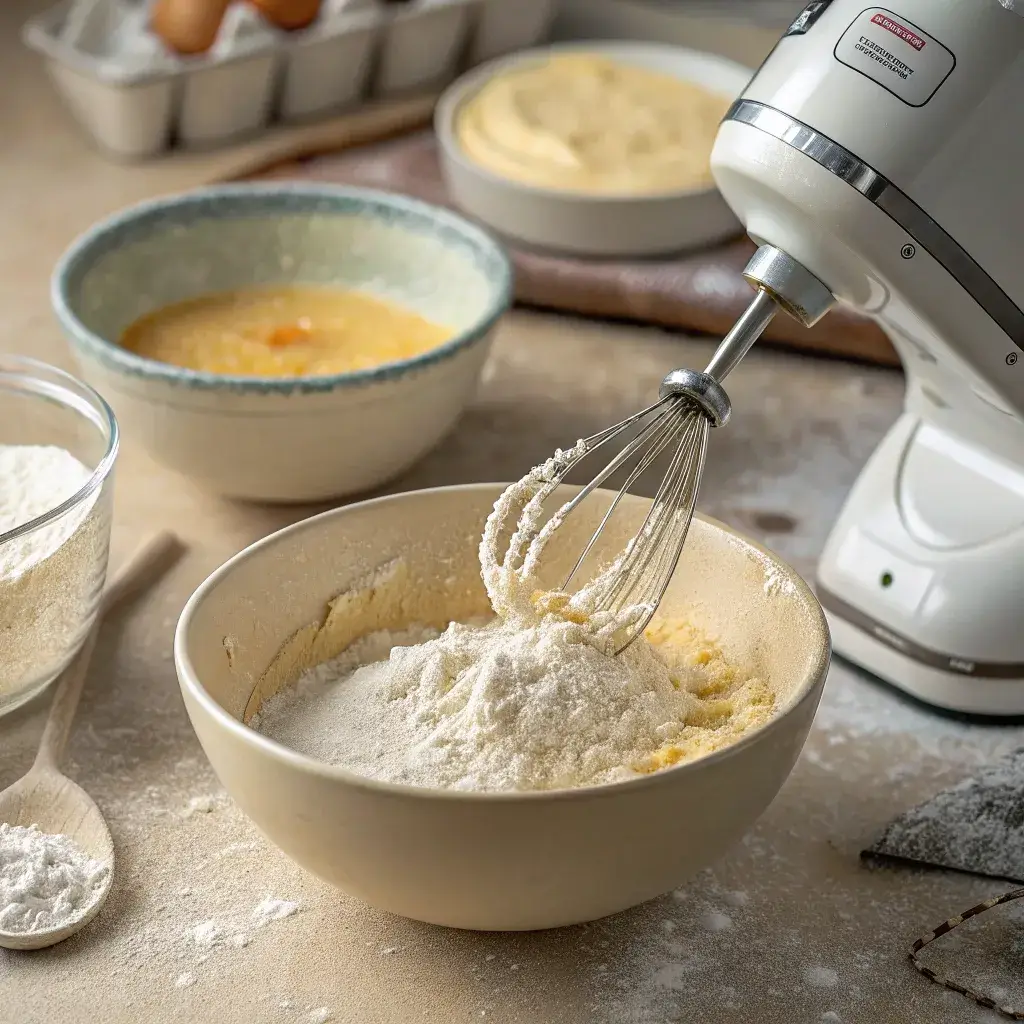
A stand mixer with a paddle attachment is ideal, but a hand mixer and a sturdy bowl will work. You’ll also need a rolling pin, parchment paper, a baking sheet, a sharp knife or pastry wheel, a ruler (for precision!), a pastry brush, and a wire cooling rack.
STEP BY STEP: CRAFTING YOUR CLASSIC FRENCH SALTED BUTTER COOKIES
Follow these steps carefully to create the perfect, crumbly texture.
CREAM THE BUTTER AND SUGAR
In your mixer bowl, combine the cold, cubed salted butter and the granulated sugar. Beat on medium speed for a full 3-4 minutes. The mixture will become very pale, fluffy, and almost resemble a thick whipped cream. This step is crucial for aerating the butter and dissolving the sugar, which contributes to the cookie’s tender texture.
INCORPORATE THE YOLKS AND VANILLA
Add 2 of the egg yolks and the vanilla extract to the creamed mixture. Beat on medium until fully combined, scraping down the bowl as needed. The mixture may look slightly curdled, which is fine. Reserve the third yolk for the egg wash.
COMBINE DRY INGREDIENTS AND MIX
In a separate bowl, whisk together the flour and baking powder. With the mixer on low, gradually add the dry ingredients to the wet ingredients. Mix only until the flour is just incorporated and a soft, pliable dough forms. Do not overmix.
CHILL AND SHAPE THE DOUGH
Turn the dough out onto a large piece of plastic wrap. Pat it into a flat disc, wrap it tightly, and refrigerate for 30-60 minutes. This firms the butter just enough for easy rolling. Preheat your oven to 350°F (175°C). Roll the dough out between two sheets of parchment paper to a thickness of about ½ inch (1.25 cm). This thick cut is traditional for Sablés Bretons.
CUT AND SCORE THE COOKIES
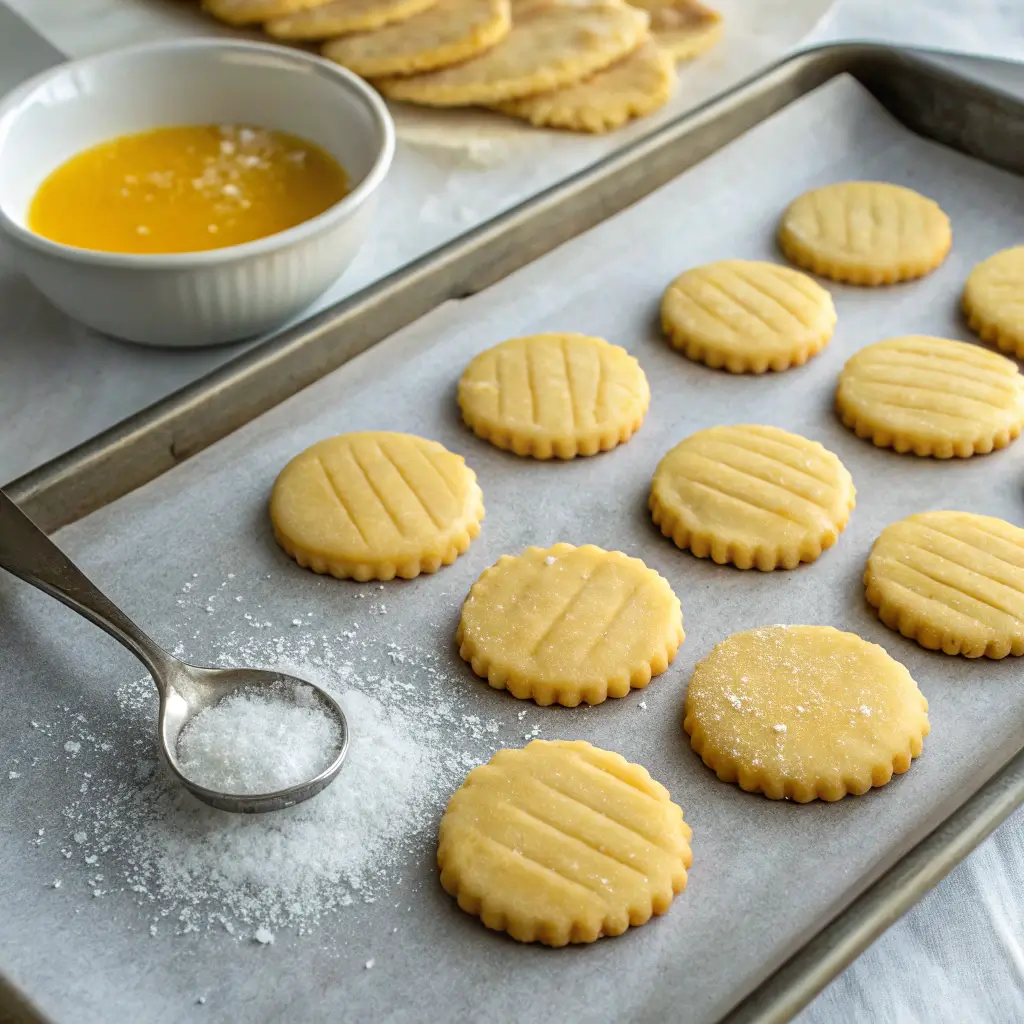
Using a sharp knife or fluted pastry wheel and a ruler, cut the dough into squares or rectangles. Traditional Sablés Bretons are often square. Use the blunt back of your knife to gently press a crosshatch pattern onto the top of each cookie. This iconic scoring helps them bake evenly and gives them their classic look.
APPLY EGG WASH AND BAKE
Transfer the scored cookies to a parchment-lined baking sheet. Beat the reserved egg yolk with a teaspoon of water to make an egg wash. Brush a thin, even layer over each cookie, being careful not to let it pool in the scores. Sprinkle a tiny amount of coarse sea salt on top. Bake for 15-18 minutes, until the cookies are a deep, golden brown all over.
COOL COMPLETELY
Let the cookies cool on the baking sheet for 5 minutes before transferring them to a wire rack to cool completely. They will firm up as they cool, achieving that perfect sandy, crumbly texture.
THE SECRET TO THE PERFECT SABLÉ TEXTURE
The iconic “sandy” texture of the Sablés Bretons comes from the specific fat-to-flour ratio and the use of egg yolks instead of whole eggs or liquids. The high-fat butter coats the flour proteins, inhibiting gluten formation and creating a tender, short crumb.
The egg yolks add richness and bind the dough without introducing excess water, which would develop gluten and make the cookies tough. The result is a cookie that literally crumbles (sables) with each bite.
PRO TIPS FOR PERFECT CLASSIC FRENCH SALTED BUTTER COOKIES
- Butter Temperature is Key: Start with cold butter straight from the fridge for creaming. This allows for proper aeration and prevents the dough from becoming greasy.
- Measure by Weight: For the most consistent results, use a kitchen scale. Flour density can vary greatly when measured by volume.
- Don’t Skip the Scoring: The crosshatch isn’t just decorative. It controls the spread and encourages an even rise and bake.
- Bake Until Deeply Golden: Do not under-bake. The rich golden-brown color is a sign of caramelized sugars and developed flavor. A pale cookie will taste bland and feel doughy.
DELICIOUS VARIATIONS TO TRY
- Citrus Zest: Add the finely grated zest of one lemon or orange to the dough with the vanilla.
- Chocolate-Dipped: Dip one half of each cooled cookie in tempered dark chocolate.
- Spiced: Add a pinch of cinnamon, cardamom, or nutmeg to the dry ingredients.
- Nutty Sables: Replace ¼ cup of the flour with finely ground, toasted almonds or hazelnuts.
STORAGE AND MAKE AHEAD GUIDE
Store cooled Sablés Bretons in an airtight container at room temperature for up to 2 weeks. They actually improve in flavor after a day or two. The dough can be wrapped tightly and refrigerated for up to 3 days or frozen for up to 3 months. Thaw in the refrigerator before rolling and baking.
TROUBLESHOOTING COMMON ISSUES
My cookies spread too much. The butter was likely too warm, or the dough was over-mixed. Ensure your butter is cold and mix only until combined. Chilling the shaped cookies for 10 minutes before baking can also help.
My cookies are tough. This is from over-mixing the dough after adding the flour, which developed the gluten. Mix on low and stop as soon as the flour disappears.
The flavor is bland. You may have used unsalted butter or under-baked the cookies. Authentic Sablés Bretons require salted butter and a full, golden bake.
THE PERFECT WAY TO SERVE SABLÉS BRETONS
Serve these Classic French Salted Butter Cookies with a cup of strong coffee, tea, or a glass of sweet dessert wine like Sauternes. They are the perfect elegant finish to a meal or a sophisticated accompaniment to afternoon tea. They also make an incredibly thoughtful homemade gift packaged in a beautiful tin.
A NOTE ON INGREDIENTS AND TRADITION
In Brittany, the Sablés Bretons are protected by a “Label Rouge” (Red Label) for quality. While we can’t replicate that exactly at home, using the best possible French-style salted butter is the single most important step to achieving an authentic taste and honoring the tradition of this beloved Classic French Salted Butter Cookie.
MY STORY: A LOVE AFFAIR WITH A BRETON COOKIE
My first encounter with a true Sablés Bretons was in a small pâtisserie in Quimper. It was served with my café au lait, unassuming in its wax paper wrapper. The first bite was a revelation, it was buttery beyond belief, with a subtle saltiness that made it impossible to eat just one.
I spent years trying to replicate that memory, learning that the specific butter was not a suggestion but the soul of the cookie. Now, baking a batch of these Classic French Salted Butter Cookies fills my kitchen with the warm, toasty scent of browned butter and nostalgia. They are my tribute to the Breton bakers, a simple luxury I love to share, and a reminder that the best things are often the simplest.
FINAL CHECKLIST BEFORE YOU BAKE
- European-style salted butter (82% fat) is cold and cubed.
- Egg yolks are separated, one reserved for wash.
- Oven is preheated to 350°F (175°C).
- Parchment paper lines the baking sheet.
- Rolling pin and sharp knife are ready.
CLASSIC FRENCH SALTED BUTTER COOKIES FAQS
What if I can’t find European salted butter?
If it’s truly unavailable, use the highest-fat, highest-quality unsalted butter you can find (like Kerrygold). Then, add ½ teaspoon of fine sea salt to the dry ingredients. The result will be different, but still delicious.
Can I make the dough in a food processor?
Yes. Pulse the cold butter and flour first until it resembles coarse sand, then add the sugar, followed by the egg yolks and vanilla, pulsing until it just comes together. Be very careful not to over-process.
Why are my cookies puffy instead of flat and sandy?
This is likely due to too much baking powder or over-creaming the butter and sugar, which incorporated too much air. Ensure your measurements are precise and cream just until pale and fluffy, not excessively so.