
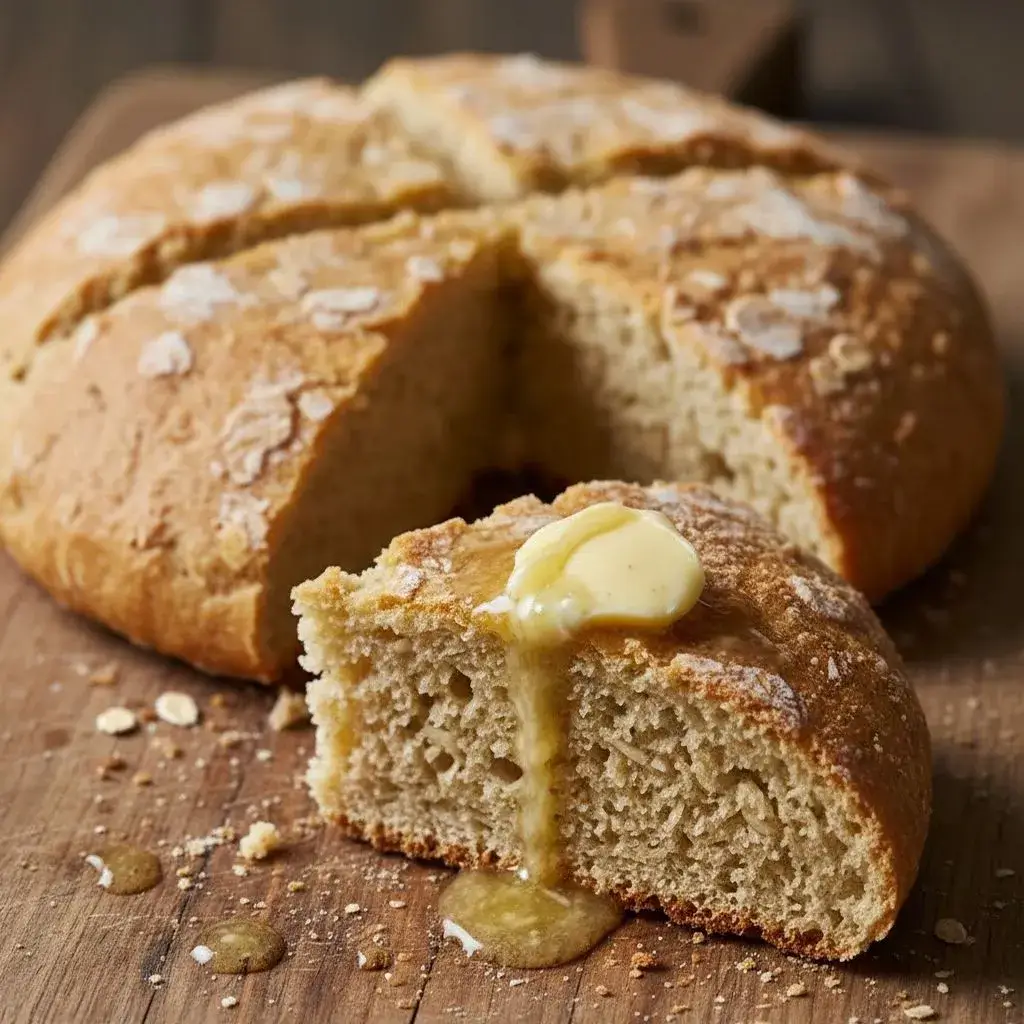
This Scottish Bannock recipe is your gateway to baking a piece of Celtic history. Imagine a round, slightly dense, and wonderfully crumbly bread, similar to a large scone or soda bread, with a rich, buttery flavor and a hearty texture from oats.
This Scottish Bannock recipe isn’t just a quick bread; it’s a heritage recipe, a humble and sustaining staple that has been baked in Scotland for centuries over an open fire or on a griddle. It’s the perfect, no-yeast bread to celebrate St. Andrew’s Day, enjoy on Burns Night, or simply to make your kitchen smell like a cozy Scottish croft. Best of all, it comes together in minutes with simple pantry ingredients, requiring no rising time and no special skills.
WHY THIS SCOTTISH BANNOCK RECIPE IS A TIMELESS TREASURE
You will love this Scottish Bannock recipe because it connects you to a rich culinary tradition with incredible ease. You will adore this bread for so many reasons.
- Firstly, the method is wonderfully simple and forgiving; with no yeast involved, there’s no worrying about proofing or kneading, making it a fantastic first bread for novice bakers.
- Secondly, the texture is uniquely satisfying, dense yet tender, crumbly but moist, and perfect for slathering with butter and jam.
- Furthermore, it is incredibly versatile; enjoy it sweet with your morning tea or savory alongside a hearty stew.
- Finally, the aroma of toasting oats and butter as it bakes is pure, unadulterated comfort, filling your home with a sense of warmth and history.
Scottish Bannock Recipe: An Easy, Heritage Bread for St. Andrew’s Day
- Total Time: 30 minutes
- Yield: 1 bannock (6–8 servings) 1x
- Diet: Vegetarian
Description
A traditional Scottish flat quick bread made with simple pantry ingredients, cooked on a griddle until golden and tender.
Ingredients
- 2 cups all-purpose flour (or wholemeal flour for a rustic version)
- 2 tsp baking powder
- 1/2 tsp salt
- 2 tbsp cold butter, cubed
- 3/4–1 cup milk or buttermilk
- Optional: 2 tbsp sugar for a sweeter bannock
- Optional: 1/4 cup dried currants or raisins
Instructions
- 1. In a large bowl, whisk together the flour, baking powder, salt, and sugar if using.
- 2. Cut in the cold butter with your fingers or a pastry cutter until the mixture resembles coarse crumbs.
- 3. Stir in the milk gradually until a soft dough forms.
- 4. Turn the dough onto a lightly floured surface and gently pat into a round about 3/4 inch thick.
- 5. If using currants or raisins, knead them in lightly before shaping.
- 6. Heat a lightly greased griddle or heavy skillet over medium-low heat.
- 7. Place the bannock on the griddle and cook for 8–10 minutes per side, or until golden and cooked through.
- 8. Slice into wedges and serve warm with butter, jam, or honey.
Notes
- Bannock can also be baked at 375°F (190°C) for 20–25 minutes.
- Avoid overworking the dough to keep the bannock tender.
- Traditional variations may include oatmeal or barley flour.
- Prep Time: 10 minutes
- Cook Time: 20 minutes
- Category: Bread
- Method: Griddle
- Cuisine: Scottish
Nutrition
- Serving Size: 1 wedge
- Calories: 180
- Sugar: 2g
- Sodium: 260mg
- Fat: 5g
- Saturated Fat: 3g
- Unsaturated Fat: 2g
- Trans Fat: 0g
- Carbohydrates: 28g
- Fiber: 1g
- Protein: 4g
- Cholesterol: 12mg
Keywords: bannock, Scottish bread, griddle bread, traditional recipe
WHAT YOU’LL NEED FOR YOUR SCOTTISH BANNOCK
This Scottish Bannock recipe stays true to its roots with simple, hearty ingredients. Using a good, coarse oatmeal is key to an authentic texture.
The Dry Ingredients:
- 2 cups Scottish Oatmeal or Pinhead Oatmeal: This is the soul of the bannock. Medium-ground oatmeal provides the perfect texture. Do not use instant oats.
- 1 ½ cups All-Purpose Flour: Provides structure to hold the crumbly oats together.
- ⅓ cup Granulated Sugar: For a subtle sweetness. Adjust to your taste or omit for a savory bannock.
- 1 tablespoon Baking Powder: The leavening agent that makes it rise.
- ½ teaspoon Baking Soda: Works with the buttermilk for extra lift.
- 1 teaspoon Salt: Essential for balancing the flavors.
The Wet Ingredients:
- ½ cup (1 stick) Cold Unsalted Butter, cubed: For richness and a flaky, tender crumb.
- ¾ cup Buttermilk, cold: The traditional liquid that adds tang and reacts with the baking soda. Plus more for brushing.

THE ESSENTIAL TOOLS FOR THE JOB
You need very little to make this historic bread!
- A cast-iron skillet or a baking sheet
- Parchment paper
- A large mixing bowl
- A pastry cutter or your fingertips
- A whisk
STEP-BY-STEP: HOW TO MAKE AUTHENTIC SCOTTISH BANNOCK
This Scottish Bannock recipe process is quick, and the key is to handle the dough as little as possible.
Prepare Your Pan and Oven
First, preheat your oven to 375°F (190°C). Line a cast-iron skillet or a baking sheet with parchment paper. Using a skillet will give the bottom a wonderfully crisp crust.
Combine the Dry Ingredients
In your large mixing bowl, whisk together the oatmeal, flour, sugar, baking powder, baking soda, and salt. This ensures the leavening agents are evenly distributed for a consistent rise.
Cut in the Butter
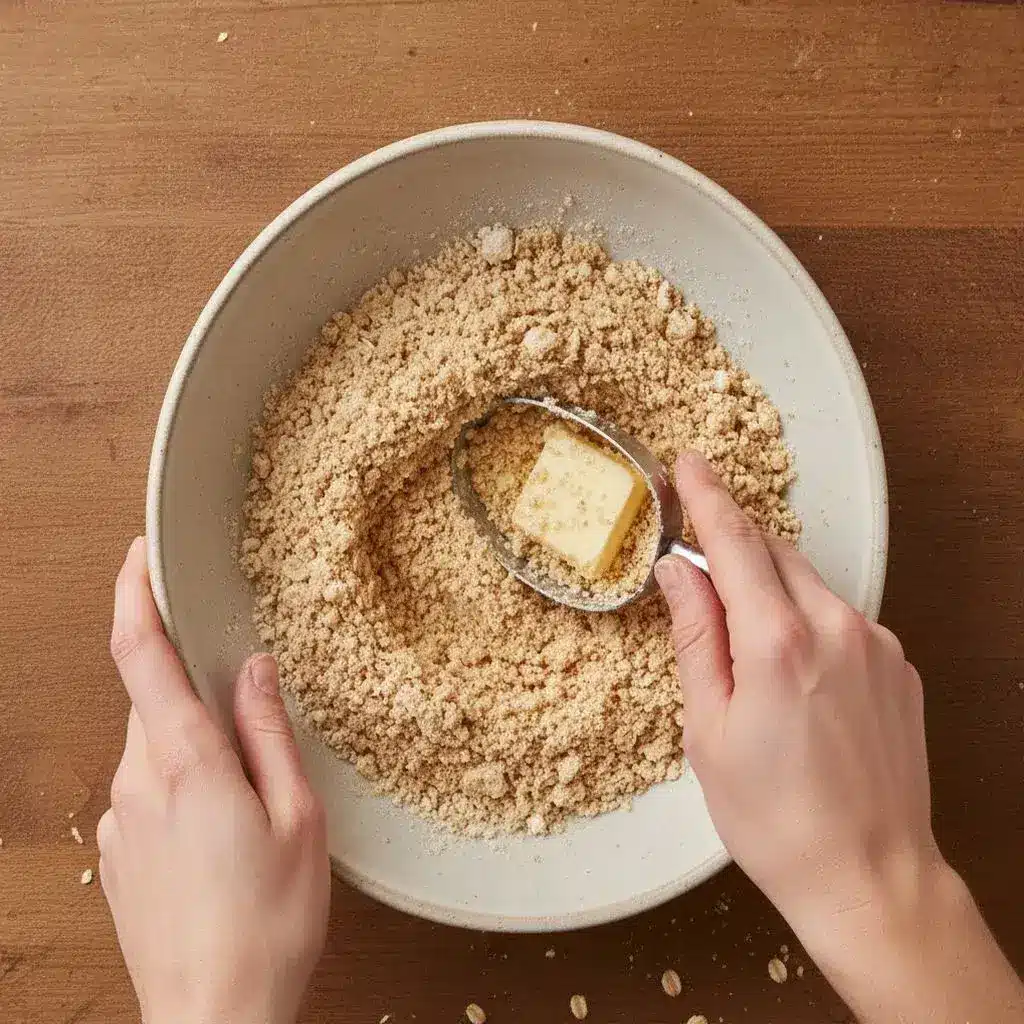
Add the cold, cubed butter to the dry ingredients. Using a pastry cutter or your fingertips, work the butter into the flour mixture until it resembles coarse breadcrumbs with a few pea-sized pieces of butter remaining. This step is crucial for creating a tender, flaky texture in your Scottish bannock.
Add the Buttermilk
Make a well in the center of the dry ingredients and pour in the cold buttermilk. Using a fork or a spatula, gently stir until a shaggy, slightly sticky dough just begins to form. Do not overmix! The dough should look rough and a bit dry in places.
Shape the Bannock
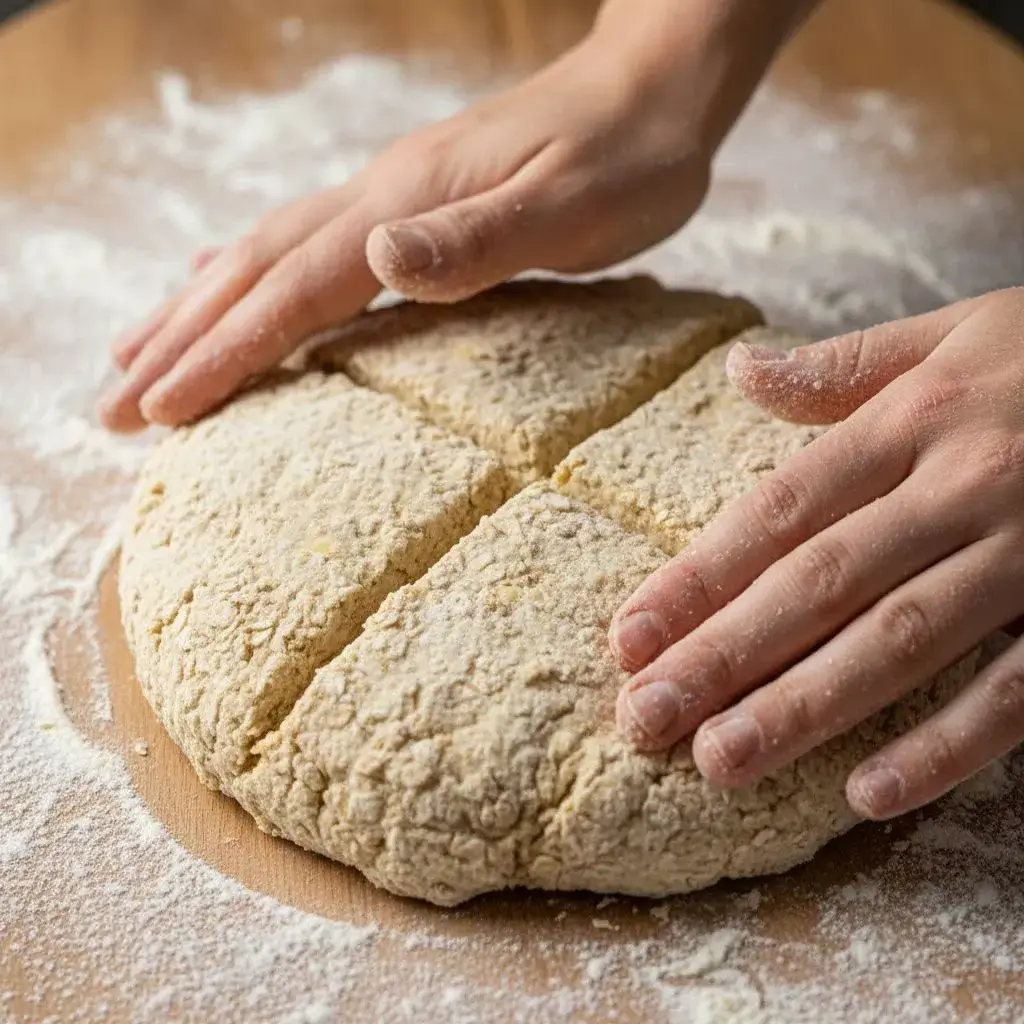
Turn the dough out onto a lightly floured surface. Gently pat and shape it into a round, about 1-inch thick. Tradition holds that you should never use a rolling pin and should only use your right hand to shape it, pressing a deep cross into the top with your thumb. This “cross” or “scone mark” lets the fairies out and ensures even baking!
Bake to Golden Perfection
Carefully transfer the round of dough to your prepared skillet or baking sheet. Brush the top with a little extra buttermilk for a beautiful golden color. Bake for 25-35 minutes, or until the bannock is golden brown on top and a skewer inserted into the center comes out clean.
Cool Slightly and Serve
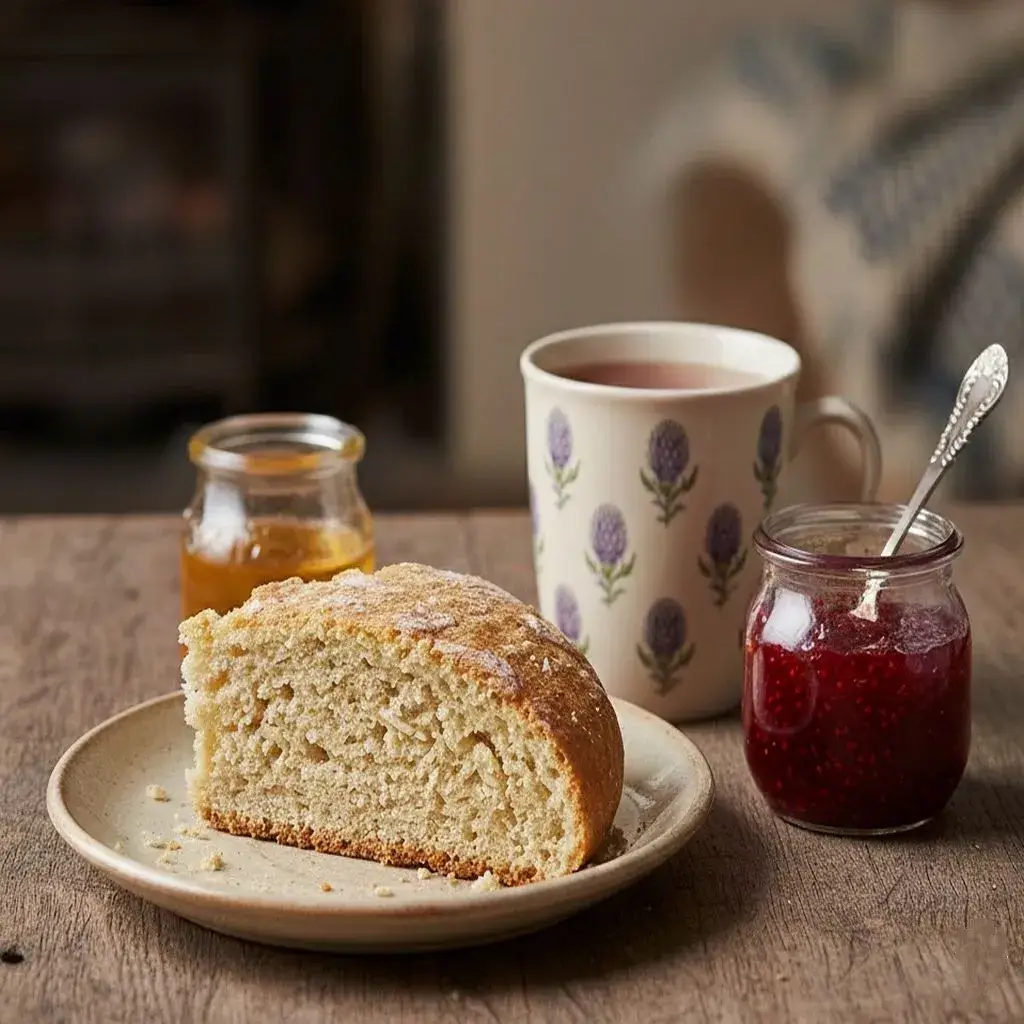
Allow the bannock to cool in the pan for at least 15-20 minutes before slicing it into wedges. It is best served warm, slathered with good butter, honey, or your favorite jam.
MY FAVORITE VARIATIONS YOU HAVE TO TRY
Make this traditional bannock recipe your own with these simple twists!
- Scottish Fruit Bannock: Add ½ cup of dried currants or raisins and 1 teaspoon of cinnamon to the dry ingredients.
- Savory Herb Bannock: Omit the sugar and add ½ cup of grated sharp cheddar cheese and 2 tablespoons of fresh chopped chives.
- Griddle Bannock (Traditional Method): Divide the dough into four smaller rounds and cook on a lightly buttered griddle or heavy skillet over medium heat for 6-8 minutes per side.
HOW TO STORE AND SERVE YOUR BANNOCK
This bread is truly best the day it is made, but you can keep it fresh.
- Counter: Store completely cooled bannock in an airtight container at room temperature for up to 2 days.
- Refresh: To refresh day-old bannock, warm it in a toaster or a 300°F (150°C) oven for 5-10 minutes.
- Freezer: Wrap the cooled bannock (or individual wedges) tightly in plastic wrap and freeze for up to 2 months. Thaw at room temperature and refresh as above.
TROUBLESHOOTING COMMON BANNOCK QUESTIONS
Even the simplest recipes can have questions. Here are the answers.
- “My bannock is too dry and crumbly.” You may have overworked the dough or added too much flour. Handle it as little as possible, and measure your flour by spooning it into the cup and leveling it off.
- “The outside is dark but the inside is doughy.” Your oven may be too hot. Try reducing the temperature by 25°F next time. Also, ensure you’re using a 1-inch thick round, not thicker.
- “It didn’t rise much.” Check that your baking powder and baking soda are fresh. Overmixing can also deflate the leavening agents.
A NOTE ON OATMEAL AND HISTORY
Authentic Scottish bannock was originally made with just oatmeal, water, and fat, cooked on a griddle (or a girdle). This version is a more modern, “oven bannock” that is slightly more cake-like and accessible. Using a coarse or medium-ground oatmeal is key to achieving the hearty, gritty texture that is characteristic of this historic bread.
MY STORY: WHY THIS RECIPE IS A CELTIC CONNECTION
My grandmother, a McLeod from the Isle of Skye, would make a version of this bannock for us whenever we visited. She never used a recipe, measuring everything in “handfuls” and “glugs.” To her, it was just “a bit of baking,” but to me, it was magic. The process of patting the dough and pressing the cross felt like a sacred ritual.
This Scottish Bannock recipe is my attempt to capture her method in measurable terms, a way to preserve and share a taste of my own heritage. For me, this isn’t just bread; it’s a direct link to my family, a taste of the Scottish Highlands, and a reminder of the power of simple, honest food.
HERITAGE BAKING: THE SIMPLE WAY
You don’t need fancy ingredients or complicated techniques to bake something with soul. This Scottish Bannock recipe is a testament to the ingenuity of our ancestors, who created sustaining, delicious food from what they had on hand. It’s a celebration of resourcefulness, tradition, and the timeless pleasure of homemade bread.
YOUR FINAL CHECKLIST BEFORE YOU BEGIN
Before you start your Scottish bannock, do a quick scan:
- Oven is preheated to 375°F (190°C).
- Skillet or baking sheet is lined with parchment.
- Butter and buttermilk are very cold.
- You have your oatmeal and flour measured.
- You’re ready to handle the dough with a light touch.
FREQUENTLY ASKED QUESTIONS
What’s the difference between bannock and scones?
They are very similar! Bannock is typically one large round, while scones are individual portions. Bannock also traditionally uses more oatmeal, giving it a heartier, grainier texture.
Can I make this gluten-free?
Yes! Substitute the all-purpose flour with a 1:1 gluten-free flour blend. The texture will be more crumbly, but it will still be delicious.
I can’t find pinhead oatmeal. What can I use?
A medium-ground rolled oat (like Bob’s Red Mill) works well. You can also pulse old-fashioned rolled oats in a food processor a few times to break them down slightly, but don’t turn them into flour.